The problem wasn't awareness. It was relevance.
Swinomish Casino & Lodge was already a well-known destination in the Pacific Northwest. Promotions were running and campaigns were active across multiple channels. But results were inconsistent. Some campaigns landed, others didn't, and it was hard to connect ad spend to actual foot traffic.
The casino didn't need more advertising. It needed the right advertising reaching the right people.
Familiarity doesn't drive repeat visits. Knowing a casino exists doesn't mean you'll go back on a Friday night, but a well-timed promotion for a game you love, seen at the right moment, might.
Swinomish's campaigns were often reaching audiences outside a realistic driving radius. The messaging was sometimes too generic to create urgency and wasn't always connected to what was happening on property. The fix wasn't a bigger budget. It was a sharper focus.
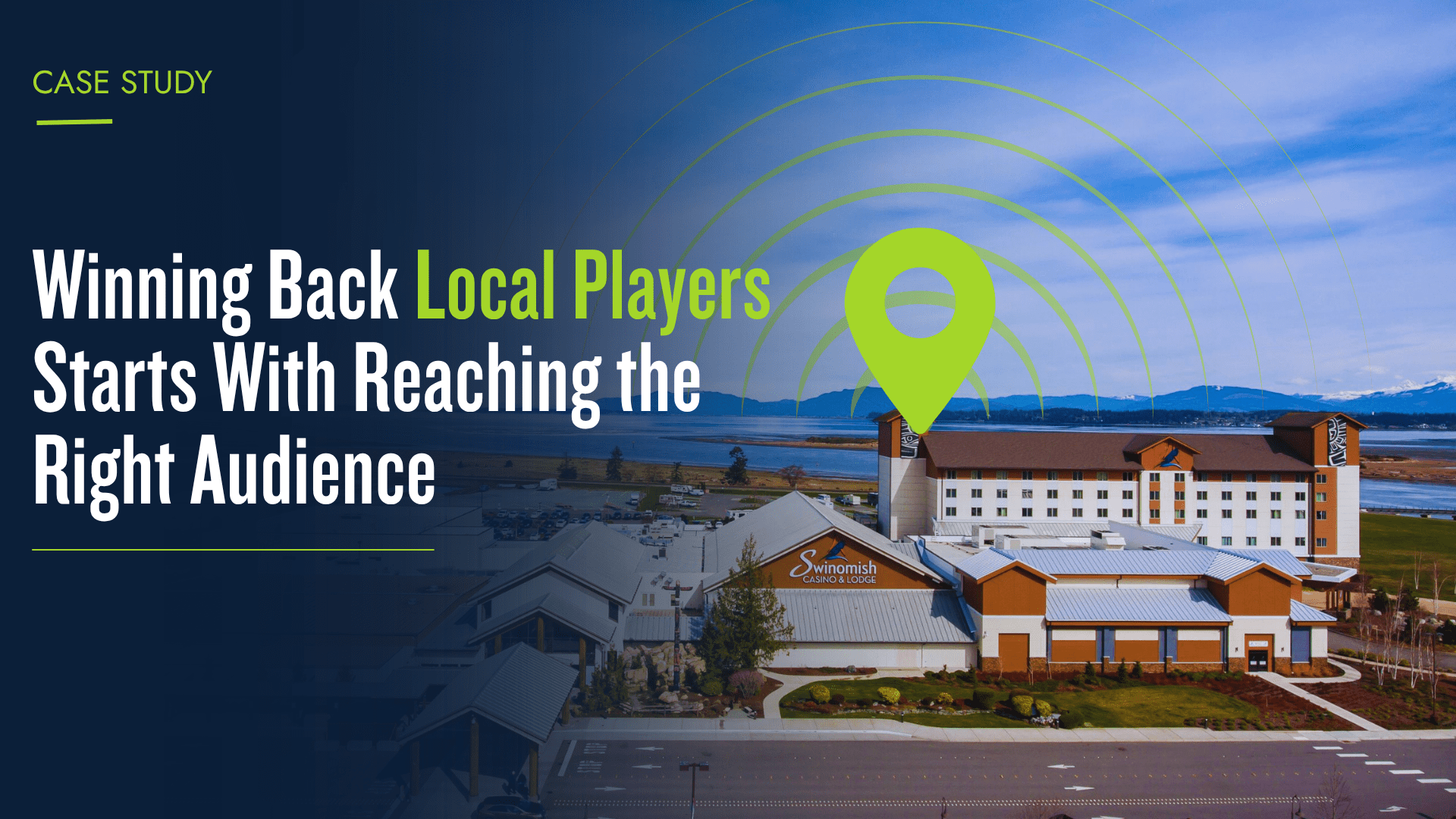
Campaigns shifted toward audiences within a real driving distance of the property. For regional casinos, local players aren't just the easiest segment to reach. They're the most valuable. Repeat visitation drives long-term revenue, and broad awareness metrics that never convert to visits are just noise.
Rather than overhauling the offer calendar, the strategy focused on making existing promotions more visible and timely across digital channels: jackpots, giveaways, dining, entertainment, seasonal events. The content got closer to the actual on-property experience.
Static branding and generic casino messaging gave way to real moments: winner photos, live promotions, food, entertainment. In a regional market where audiences see the same brands on repeat, ad fatigue is a real threat. Keeping creative current kept the brand feeling alive.
Clicks and impressions gave way to behavioral signals: direction requests, calls, promotion engagement. These metrics more closely reflect intent to visit. That shift made optimization meaningful, with decisions driven by real engagement rather than surface-level performance.
As the strategy tightened, performance stabilized. Nearby audiences engaged more consistently, promotions aligned with how players actually behaved, and media spend became more efficient. More importantly, the property built stronger ongoing relationships with the local players who drive its long-term business.
While every market is different, the lessons from Swinomish apply to many regional casino properties facing similar challenges.
Most casino marketing problems aren't caused by underinvestment. They come from disconnected messaging, targeting that's too broad, and campaigns that don't reflect the real experience on property.
The most effective casino marketing strategies tend to do a few things consistently well: reach nearby audiences, keep promotions visible and timely, refresh creative often, and measure the signals that actually lead to visits. For Swinomish, getting sharper on all four made a measurable difference without increasing the budget. The lesson is simple: better alignment often beats bigger spending.